
When Someone Is Simply Better Than You

Updated: May 9
The Uneasy Feeling When Someone Is Simply Better Than You
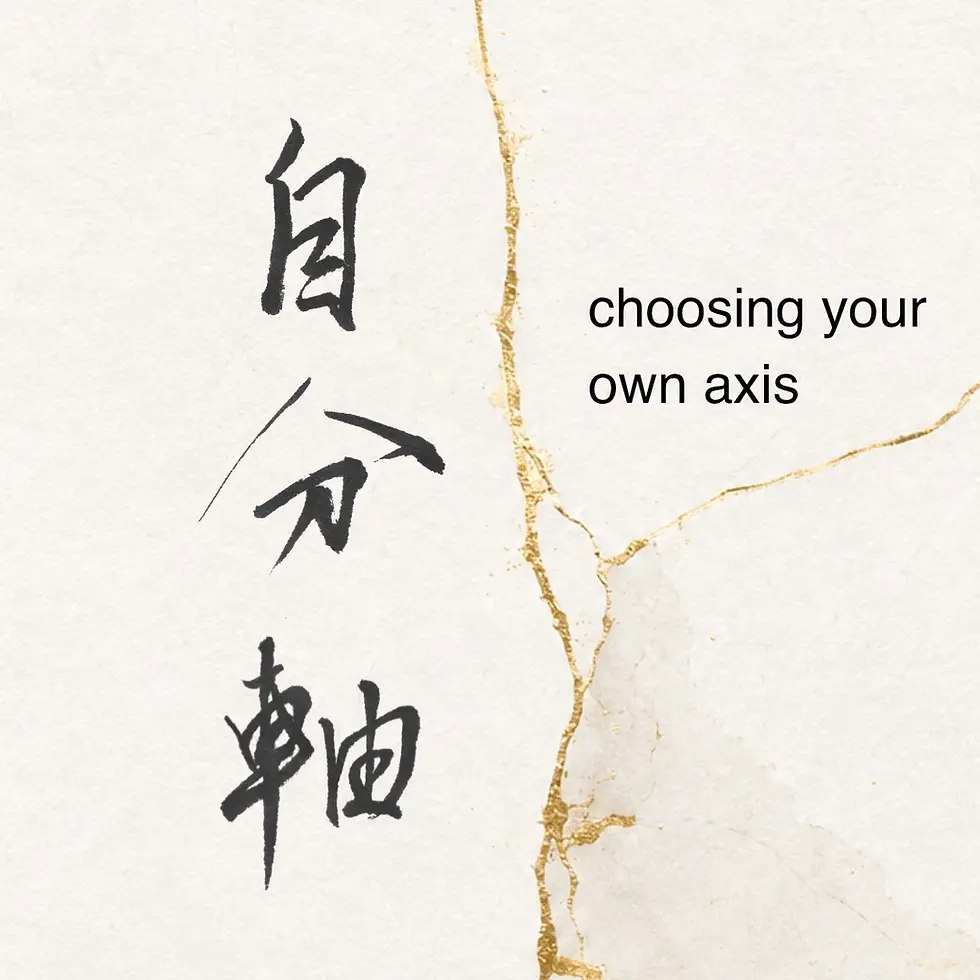
There is a particular kind of discomfort that arises when someone is simply better than you.
Not louder. Not more ambitious. Not even more successful.
Just better in a way that feels undeniable — more precise, more stable, more assured.
Years ago, when I was still working in a company, my superior had extraordinarily beautiful handwriting. His characters were steady and balanced, the strokes neither rushed nor hesitant. When formal envelopes needed to be addressed for weddings or ceremonies, everyone instinctively asked him. It was never officially decided; it was simply understood.
Even now, I do not think I could write like that.
When I think back on that time, I remember the atmosphere of the office when those envelopes were prepared — the careful selection of paper, the slight tension before important occasions, and the calm certainty with which he picked up the brush. His writing never looked forced. It seemed to exist naturally, as if stability itself had taken form on the page.
What unsettled me was not envy. It was something quieter and more persistent. A subtle tightening in the chest. An awareness that, in the most traditional measure of calligraphy, I would not win.
He was kind and encouraging, the sort of person who would likely praise my work today if he saw it. I know this. And yet even now, the thought of him seeing my work still makes me hesitate.
Excellence, especially when it is calm and gracious, has a way of illuminating the places where we still feel uncertain. This is often what it feels like when someone is simply better than you, even when there is no competition in sight.
Comparison as Mental Noise
When someone is simply better than you, comparison easily becomes one of the most persistent forms of mental noise.
It rarely arrives dramatically. Instead, it settles in the background and begins to shape the way we see ourselves.
Comparison then starts to ask uncomfortable questions.
Are you legitimate?
Are you trained enough?
Are you merely improvising while others have mastered the fundamentals?
For creative people, these thoughts easily turn into what is often described as imposter syndrome. But beneath that label is something more precise: confusion about measurement.
For years, part of me measured my work against a scale that was never meant to be mine. I compared technical stability with conceptual exploration. I compared mastery of tradition with a dialogue between tradition and the present.
By that measure, I inevitably felt inadequate.
When the axis of comparison is wrong, the conclusion will always be distorted.
Much of what we experience as self-doubt is not a lack of ability, but a lack of clarity about what we are actually trying to do. Even when someone is simply better than you in one dimension, that does not mean you are meant to follow the same path.
This kind of misaligned comparison creates noise — the kind of noise that slowly erodes confidence without ever clearly revealing its source.
Choosing Your Own Axis
It took me years to understand something simple.
I am not trying to win on stability.
My former superior represents mastery of traditional form — an embodiment of technical refinement achieved through repetition and discipline. What I am building is something different: a dialogue between tradition and the present, between language and space, between inherited structure and contemporary expression.
The intention is different, and therefore the measurement must also be different.
When someone is simply better than you in a particular dimension, it does not mean you are meant to compete in that dimension.
Clarity does not come from becoming superior in every direction. It comes from recognizing which direction is actually yours.
Once that axis becomes clear, comparison begins to lose its authority. Admiration can remain, but self-erasure no longer follows.
You can recognize excellence without feeling diminished by it.
Mental Clarity and the End of Misaligned Comparison
Understanding what it means when someone is simply better than you is an important step toward mental clarity.
Denoising your life does not mean eliminating excellence around you, nor does it require pretending that others are not more skilled in certain ways.
It means refusing to let someone else’s scale define your worth.
You can admire technical mastery without abandoning your own path. You can respect tradition without duplicating it. You can acknowledge limitations without shrinking your presence.
Today, if that former superior were to see my work and say that it is interesting, I would accept it — not because I have become technically identical to him, but because I no longer measure myself by his scale.
Eventually you realize that what matters is not whether someone is simply better than you, but whether you understand your own direction clearly enough to continue.
Mental clarity is not the absence of comparison.
It is the ability to recognize when comparison is misaligned.
You do not have to defeat what is excellent.
You only have to know where you stand.
And when you stand there clearly, much of the noise begins to fall away on its own.


